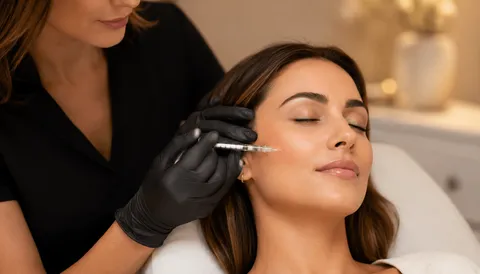

As a nurse practitioner who has administered thousands of neuromodulator treatments, I get this question constantly: 'What's the difference between Botox and Dysport, and which one should I get?' The honest answer is nuanced — and it depends on your anatomy, treatment goals, and history with injectables.
What Both Products Actually Do
Botox (onabotulinumtoxinA) and Dysport (abobotulinumtoxinA) are both botulinum toxin type A preparations. They work the same way — blocking acetylcholine release at the neuromuscular junction, which prevents the muscle from contracting. Relaxed muscle means softened lines. Neither product is 'stronger' or 'better' in absolute terms; they behave differently in ways that matter clinically.
The Key Clinical Differences
Spread pattern is the most practically important difference. Dysport has a lighter protein load and smaller molecular structure, which means it diffuses more broadly from the injection point. In areas like the forehead or crow's feet — where you want soft, natural relaxation across a wide zone — this works beautifully. In targeted areas like the glabella where precision is critical, Botox's tighter diffusion radius is often the better tool.
Onset is also different. Dysport typically shows results within 24–48 hours. Botox often takes 3–5 days for full effect. Longevity is roughly comparable — 3 to 4 months for most patients — though individual variation is significant and depends on metabolism, muscle mass, and injection technique.
Which One Is Right for You?
At M Health, we carry both products and select based on the treatment area and patient anatomy. The best way to know: a brief consultation. We'll look at your anatomy, ask about your goals and timeline, and make a recommendation. Either way, the goal is the same — you, but rested.